Convex hull, faces & pores
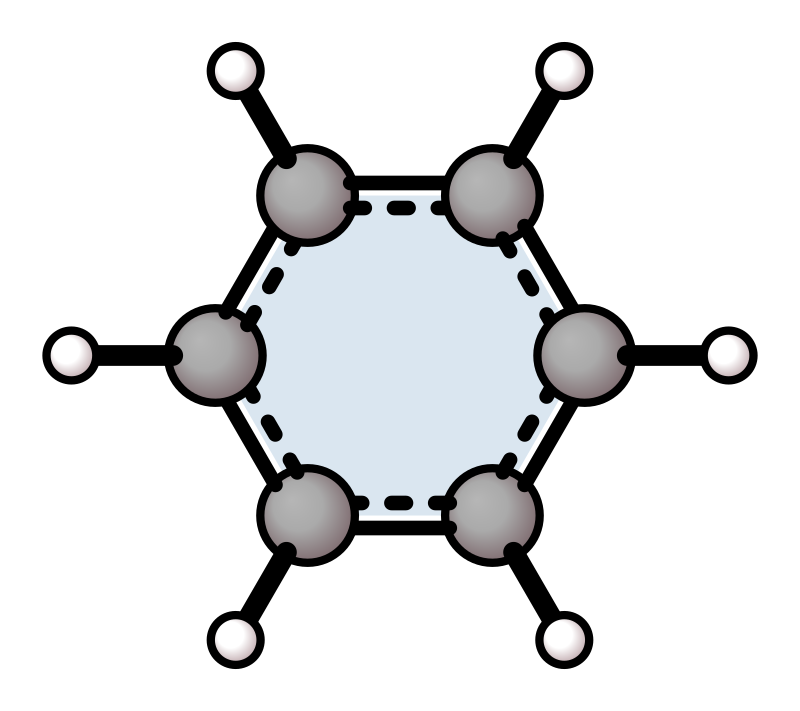
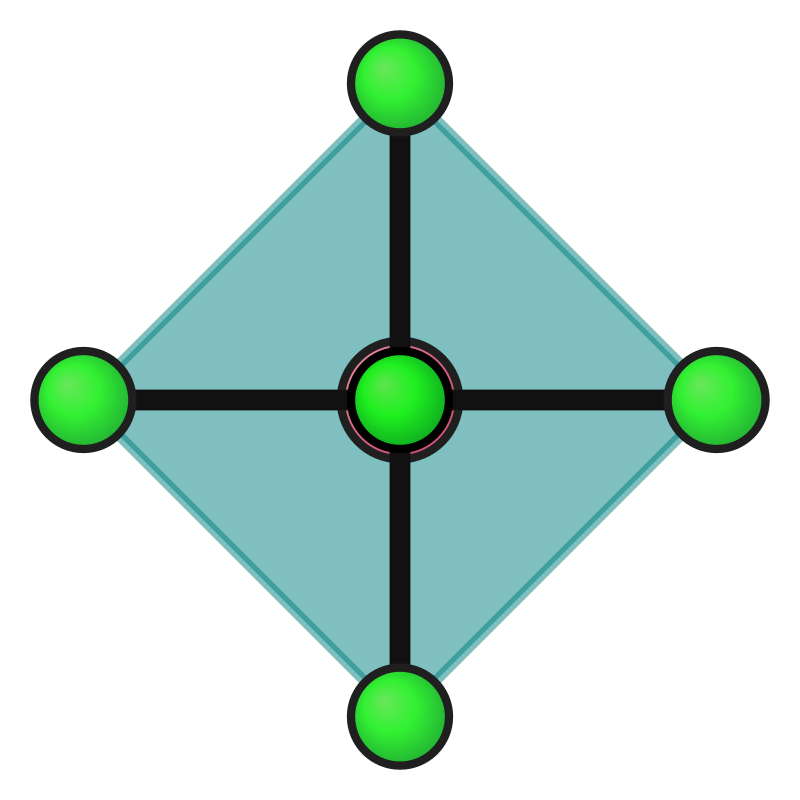
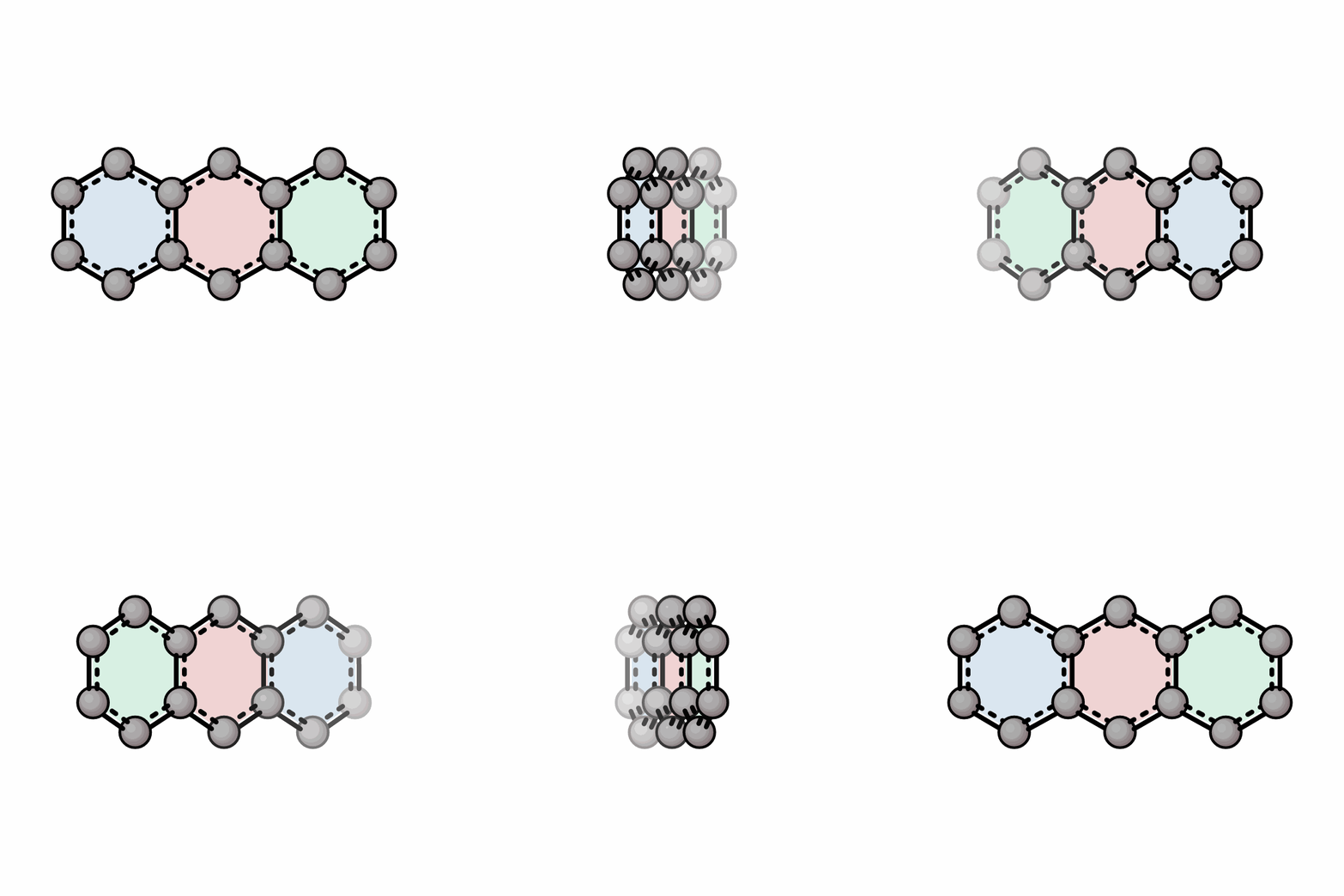
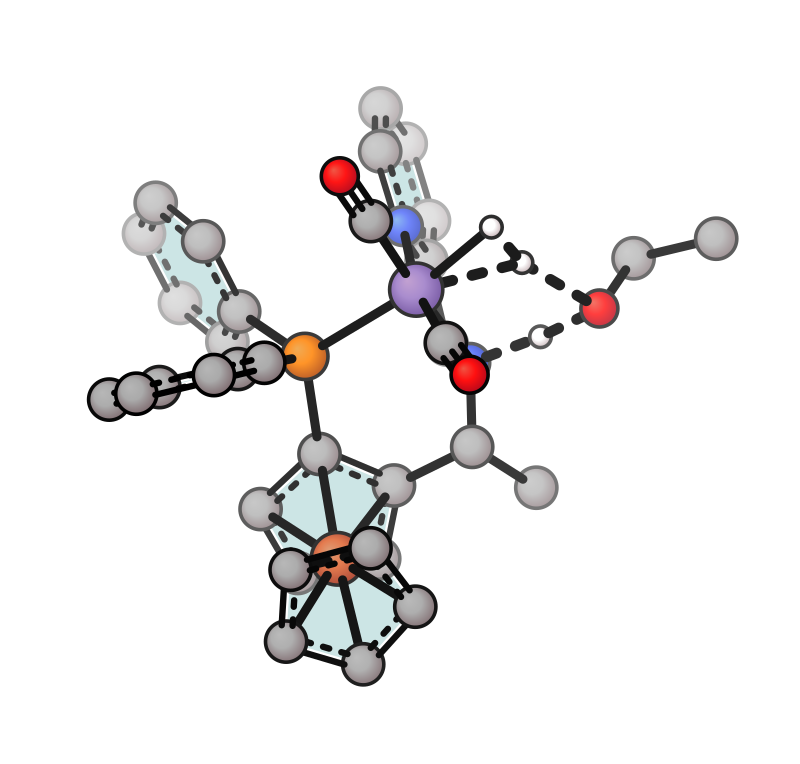
Draw the convex hull of selected atoms as semi-transparent facets — useful for aromatic rings, coordination spheres, or any subset of atoms. Facets are depth-sorted for correct occlusion. Hull edges that do not coincide with bonds are drawn as thin lines for better 3D perception; disable with --no-hull-edge.
Use --hull from the CLI (no args = all heavy atoms, rings to auto-detect aromatic rings, or 1-indexed atom ranges for subsets), or from Python pass hull= to render(): True for all heavy atoms, "rings" for automatic aromatic ring detection (one hull per ring), a flat list of 1-indexed atom indices for one hull, or a list of lists for multiple hulls with optional per-subset hull_color=["red", "blue"]. A default color palette cycles automatically for multiple subsets.
Benzene ring |
Anthracene (all ring carbons) |
CoCl₆ octahedron |
|---|---|---|
|
|
|
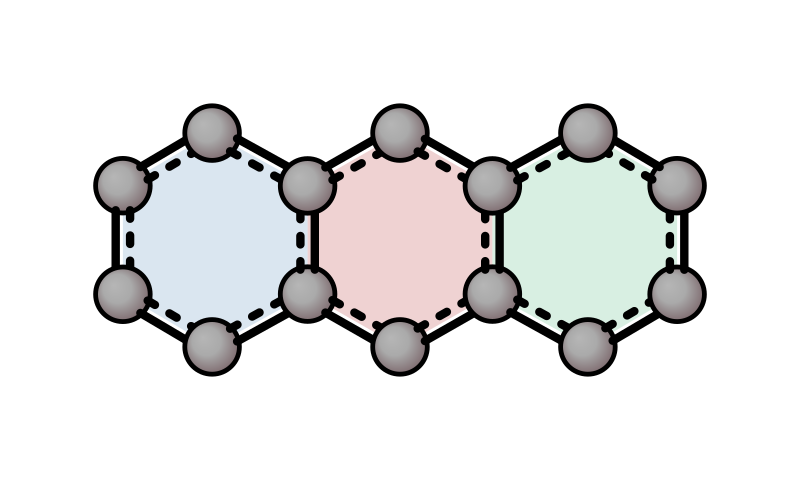
Anthracene ring |
Anthracene rot |
Auto rings ( |
|---|---|---|
|
|
|
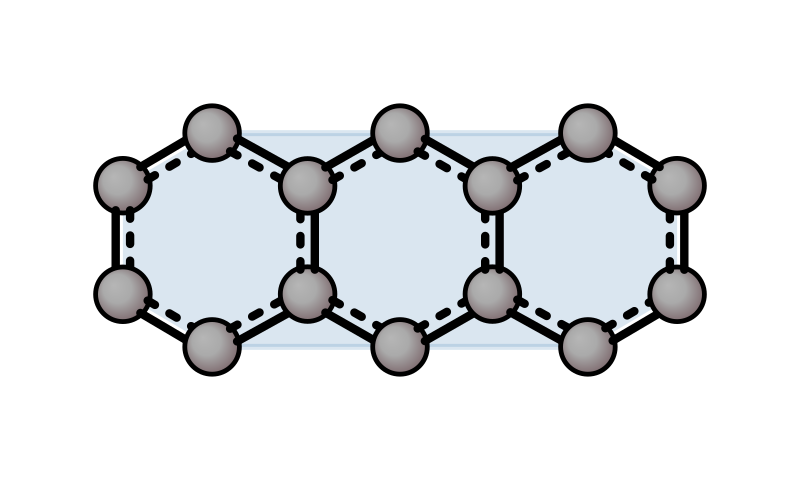
CLI:
# All heavy atoms:
xyzrender benzene.xyz --hull -o benzene_hull.svg

# Single subset (1-indexed atom range):
xyzrender benzene.xyz --hull 1-6 --hull-color steelblue --hull-opacity 0.35 -o benzene_ring_hull.svg

# Multiple subsets with per-hull colors:
xyzrender anthracene.xyz --hull 1-6 4,6-10 8,10-14 -o anthracene_hull.svg

# Auto-detect aromatic rings (one hull per ring, colours cycle automatically):
xyzrender mn-h2.log --ts --hull rings --hull-color teal -o mnh_hull_rings.svg
Python:
from xyzrender import load, render, render_gif

# Single subset: one hull (e.g. benzene ring carbons, 1-indexed)
benzene = load("structures/benzene.xyz")
render(benzene, hull=[1, 2, 3, 4, 5, 6],
       hull_color="steelblue", hull_opacity=0.35, output="images/benzene_ring_hull.svg")
render_gif(benzene, gif_rot="y", hull=[1, 2, 3, 4, 5, 6],
           hull_color="steelblue", hull_opacity=0.35, output="images/benzene_ring_hull.gif")

# Multiple subsets with per-subset colors (1-indexed):
render(mol, hull=[[1, 2, 3, 4, 5, 6], [7, 8, 9, 10, 11, 12]],
       hull_color=["steelblue", "coral"], hull_opacity=0.35,
       output="anthracene_hull.svg")

# Auto-detect aromatic rings — each ring gets its own hull:
render(mol, hull="rings", hull_color="teal")
Options (passed to render()):
Option |
Description |
|---|---|
|
|
|
Single string or list of strings for per-subset colours (default palette cycles automatically) |
|
Ring colouring mode: |
|
Fill opacity for all hull surfaces |
|
Draw non-bond hull edges as thin lines (default: |
|
Edge stroke width as fraction of bond width |
Face detection
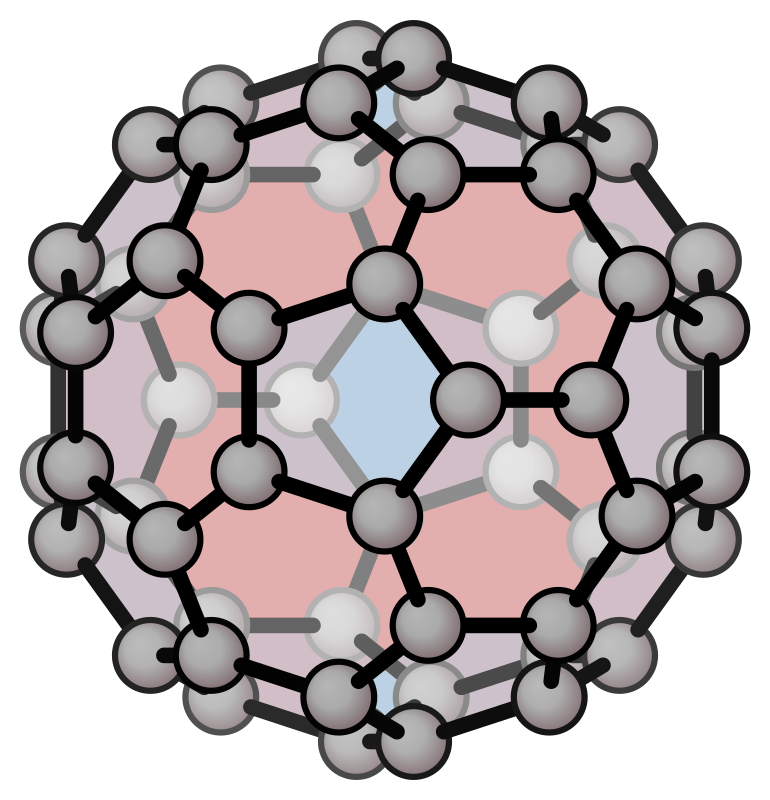
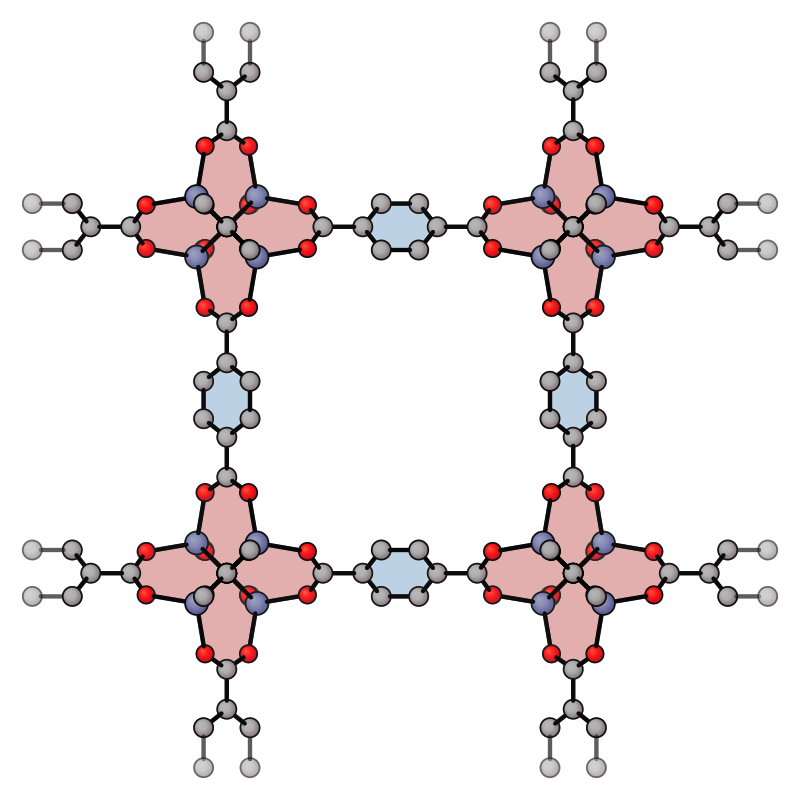
Detect structural ring faces in the molecular graph — planar rings in 2D sheets (graphene, COFs) and roughly-planar rings in 3D structures (MOFs, zeolites, buckyballs). Each face is rendered as an ordered polygon (not a convex hull), so concave rings display correctly. Faces are automatically coloured by ring fingerprint (size + element types).
For 3D structures, face traversal runs from 6 uniformly spaced viewing directions to catch faces at any orientation. Non-planar projection artefacts are filtered by a planarity tolerance (--face-planarity, default 0.25).
Buckyball faces (12x5 + 20x6) |
MOF-5 faces (60x6) |
|---|---|
|
|
CLI:
# Structural faces:
xyzrender buckyball.xyz --hull faces -o buckyball_faces.svg

# MOF with periodic cell (--no-cell hides the box):
xyzrender MOF-5.xyz --hull faces --no-cell -o mof5_faces.svg

# Adjust planarity tolerance (stricter = fewer faces):
xyzrender MOF-5.xyz --hull faces --face-planarity 0.1 -o mof5_strict.svg

# Filter small rings:
xyzrender MOF-5.xyz --hull faces --ring-min-size 5 -o mof5_no_small.svg
Python:
from xyzrender import load, render

mol = load("MOF-5.xyz")
render(mol, hull="faces", no_cell=True, output="mof5_faces.svg")

# Adjust face planarity and ring size filtering:
render(mol, hull="faces", face_planarity=0.1, ring_min_size=5, output="mof5_strict.svg")
Pore detection
Detect 3D pore cavities in frameworks (MOFs, zeolites) and render inscribed spheres at pore centres. Uses coarse-grained topology: the molecular graph is simplified (prune leaves, contract chains, merge metal clusters), then shortest cycles in the cluster-net define pore windows. For periodic structures, the detection is PBC-aware (3×3×3 tiling of cluster centroids).
Buckyball pore |
MOF-5 pore |
MOF-5 faces + pore |
Rotation |
|---|---|---|---|
|
|
|
|
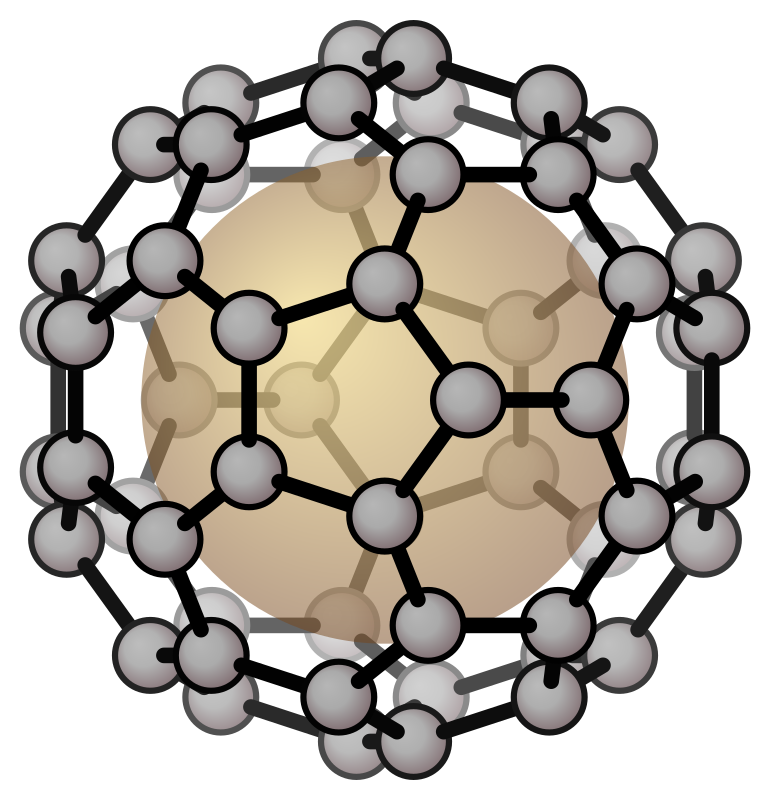
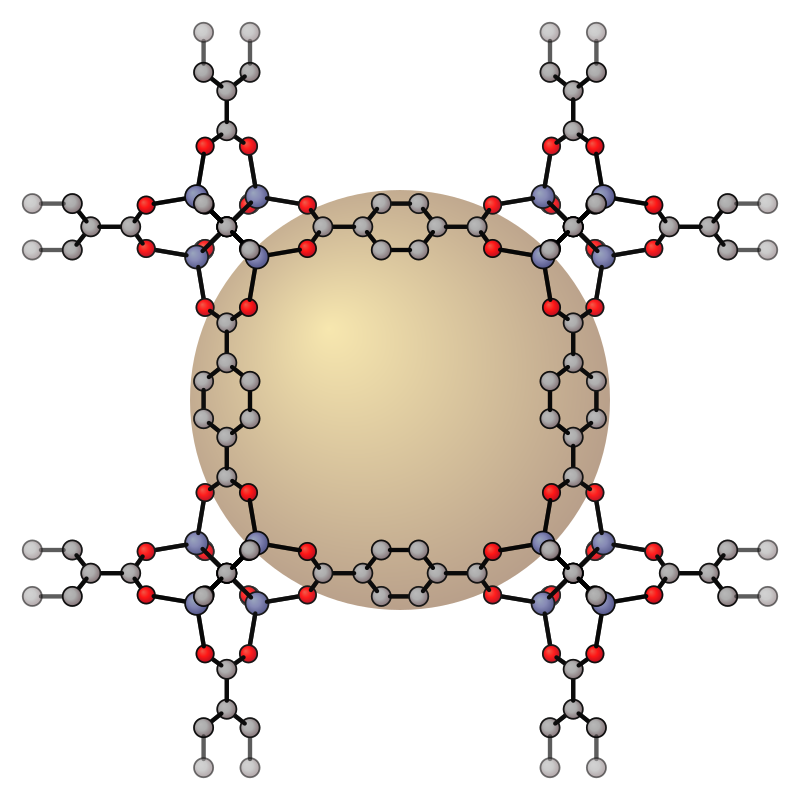
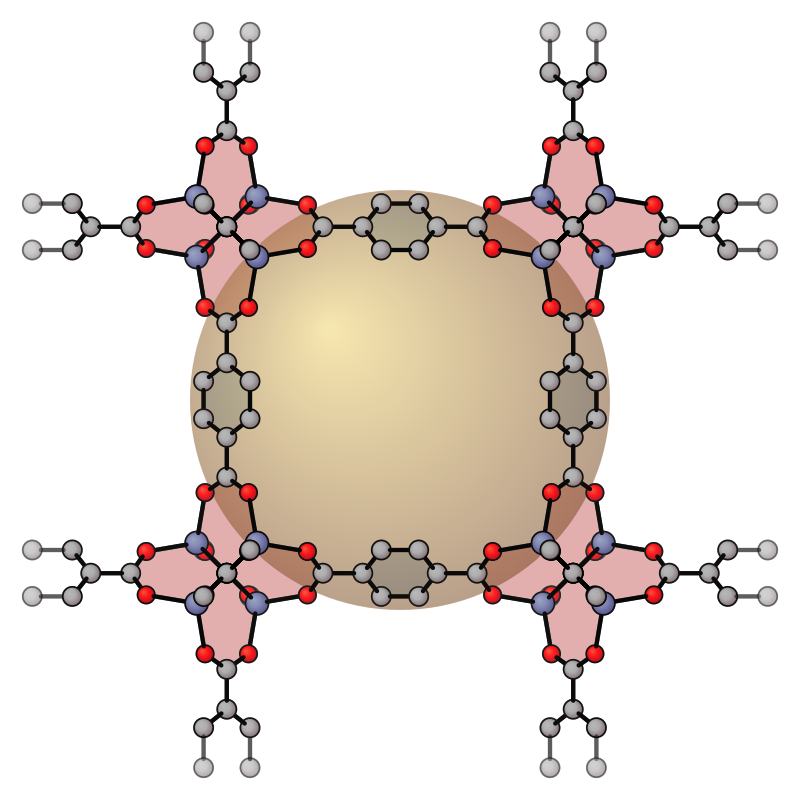
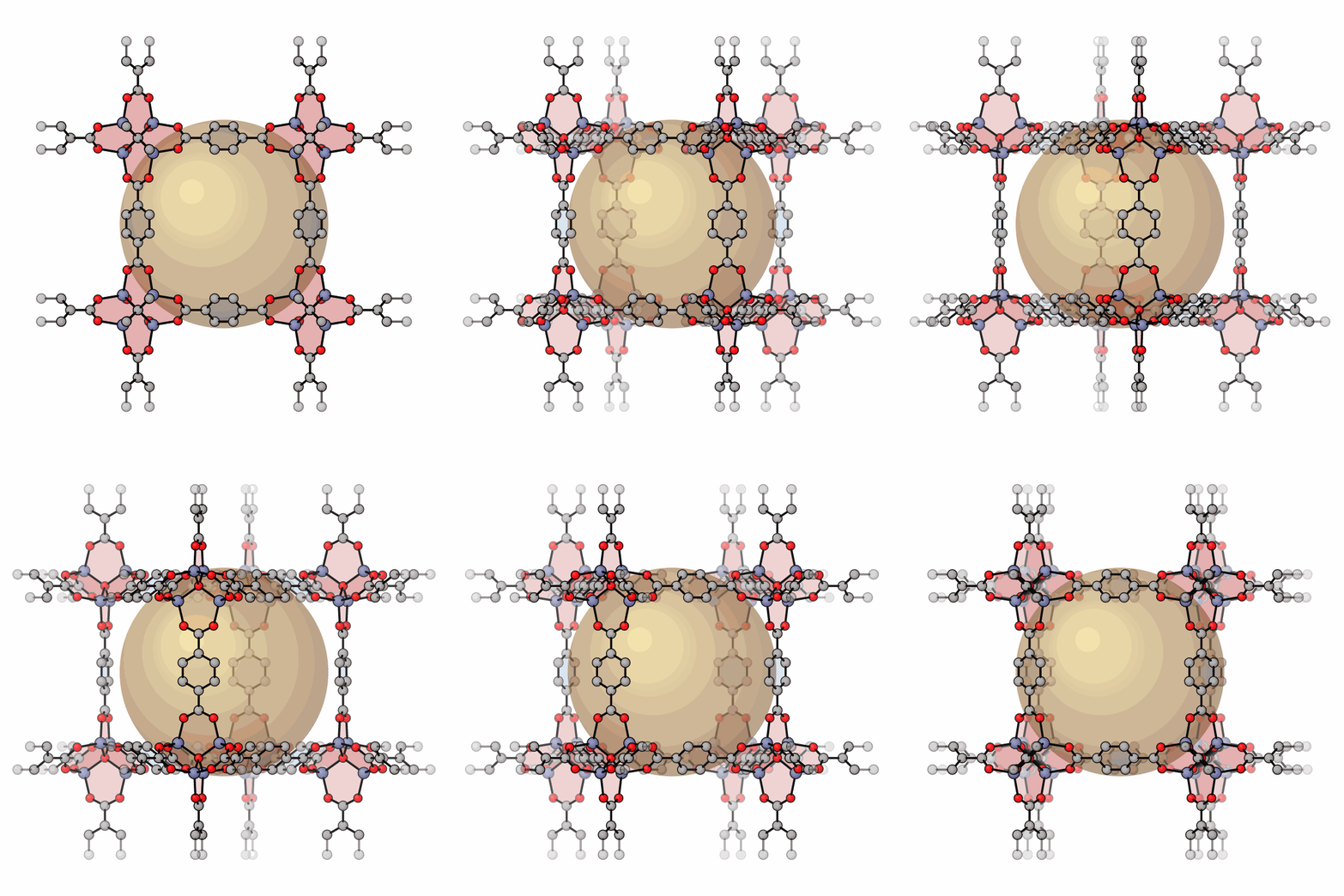
CLI:
# Pore sphere only:
xyzrender MOF-5.xyz --pore --no-cell -o mof5_pore.svg

# Faces + pore sphere:
xyzrender MOF-5.xyz --hull faces --pore --no-cell -o mof5_faces_pore.svg

# Customise pore sphere:
xyzrender MOF-5.xyz --pore --pore-color coral --pore-opacity 0.3 -o mof5_pore_custom.svg

# Animated rotation with faces + pore:
xyzrender MOF-5.xyz --hull faces --pore --no-cell --gif-rot
Python:
from xyzrender import load, render, render_gif

mol = load("MOF-5.xyz")

# Pore sphere:
render(mol, pore=True, no_cell=True, output="mof5_pore.svg")

# Faces + pore:
render(mol, hull="faces", pore=True, no_cell=True, output="mof5_faces_pore.svg")

# Animated:
render_gif(mol, hull="faces", pore=True, no_cell=True, gif_rot="y", output="mof5.gif")
Pore options (passed to render()):
Option |
Description |
|---|---|
|
Enable pore sphere detection and rendering |
|
Pore sphere colour (default: |
|
Pore sphere opacity (default: 0.5) |
|
SVD planarity tolerance for 3D face filtering (default: 0.25) |
|
Ring size range for face/pore detection |