Crystal Structures
Python. Most
xyzrenderflags below map 1:1 to keyword arguments onrender(). Cell reading is aload()option:mol = load("foo.xyz", cell=True)(auto-detected for VASP/QE/PDB-CRYST1/CIF/extXYZ inputs). The rendering flags are thenrender()kwargs — worth flagging:--supercell M N L→supercell=(2, 2, 1)(tuple) and--axis HKL→axis="111"(string).from xyzrender import load, render mol = load("caffeine_cell.xyz", cell=True) render(mol, supercell=(2, 2, 1), output="cell_221.svg") render(mol, axis="111", no_cell=True)
extXYZ unit cell
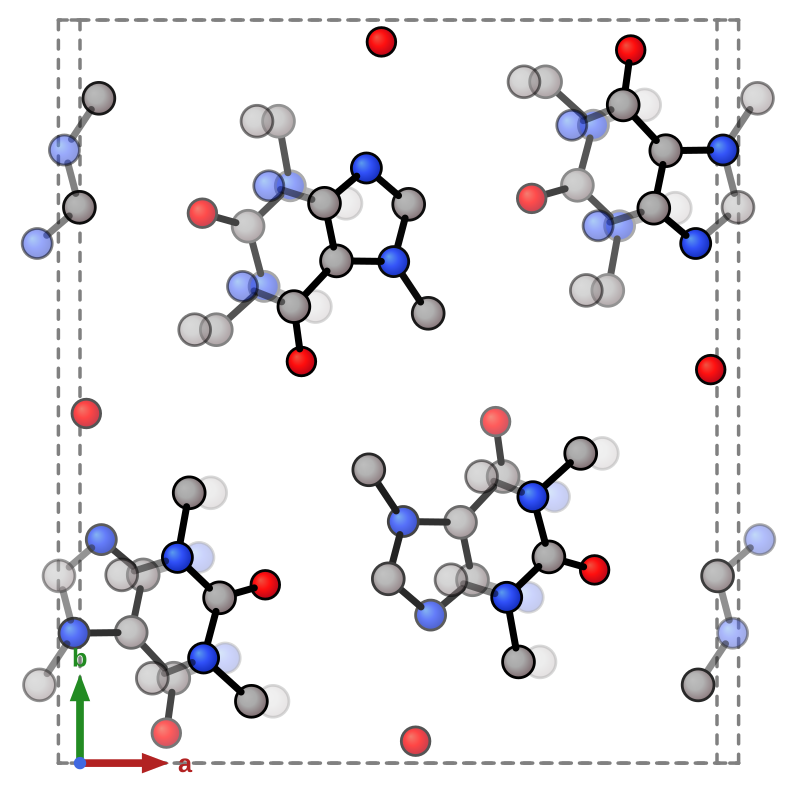
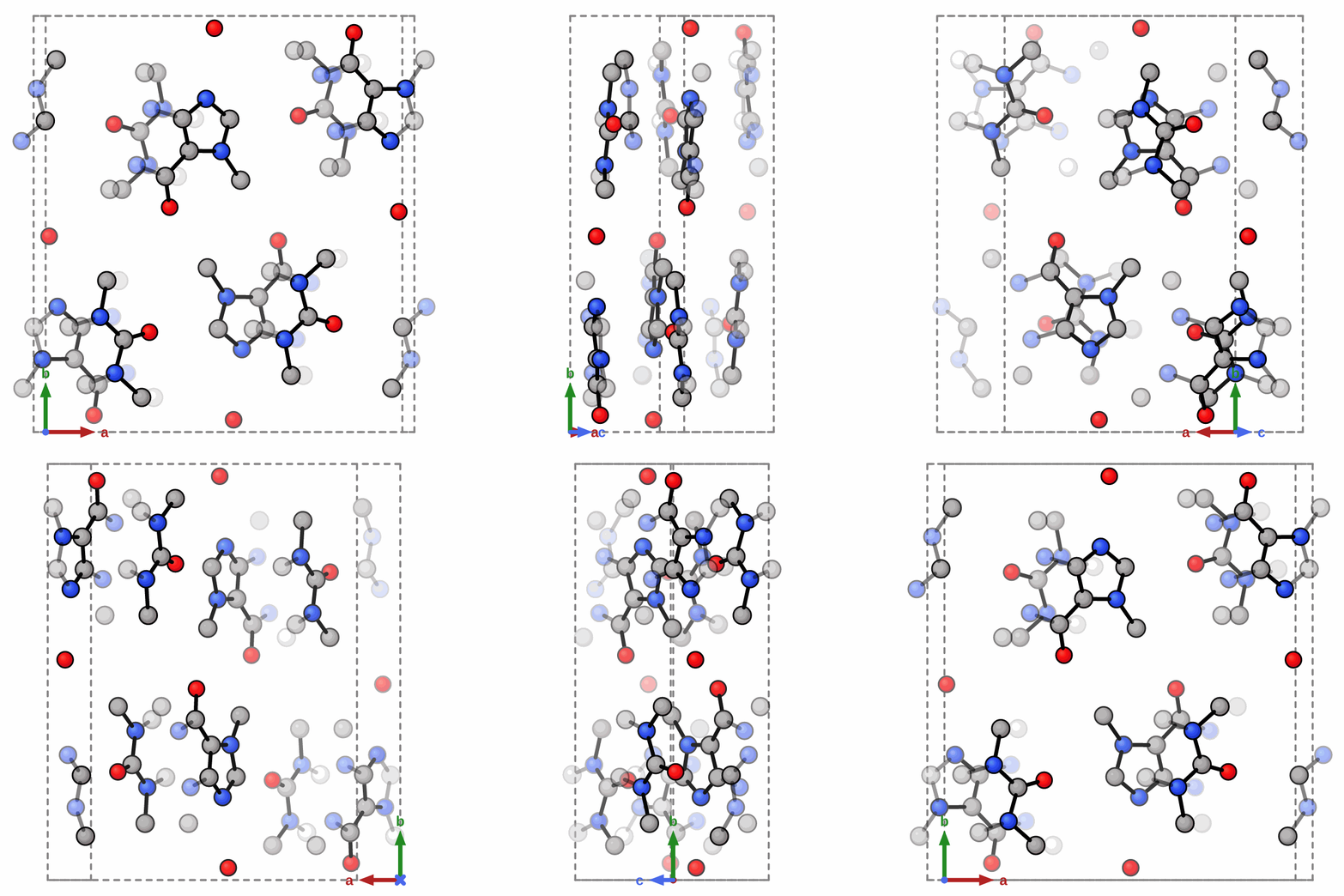
Draw the unit cell box for periodic structures from an extXYZ file with a Lattice= header. The cell is detected automatically — no extra flag needed.
Unit cell |
Cell rotation |
Custom color |
|---|---|---|
|
|
|
Default |
No ghost atoms |
No cell box |
|---|---|---|
|
|
|
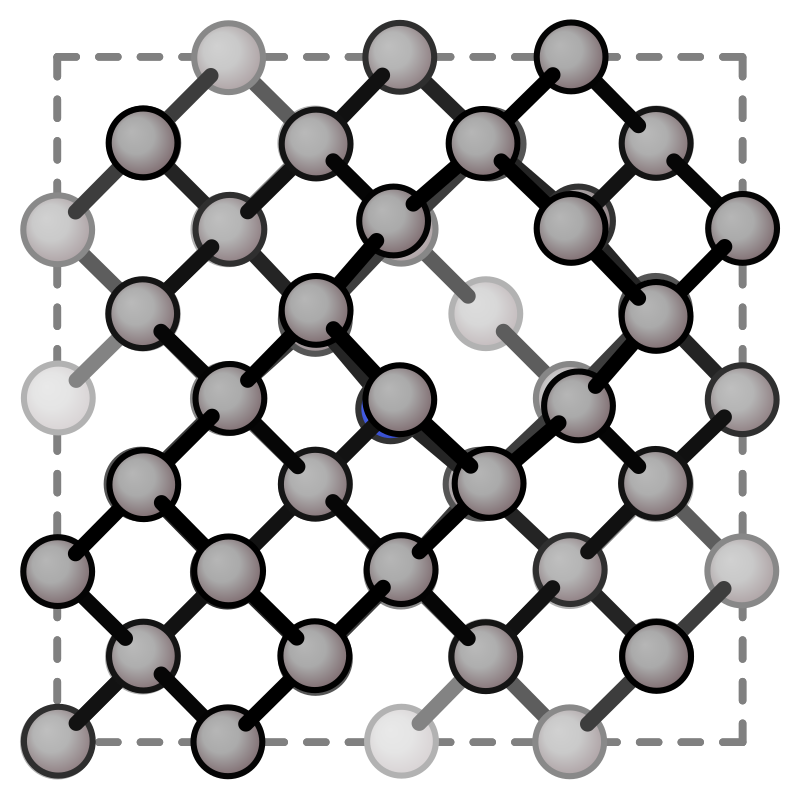
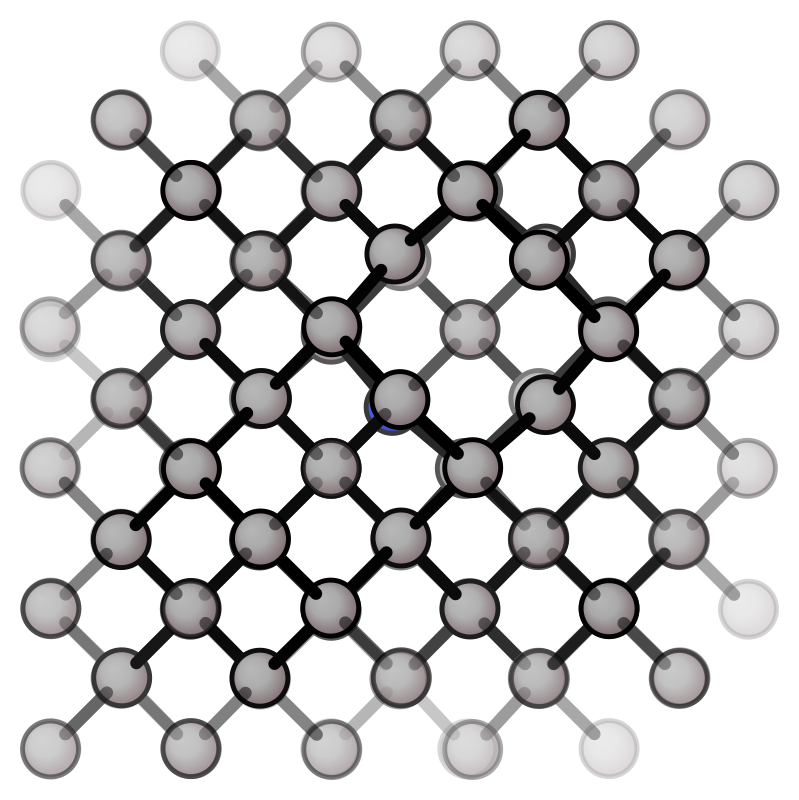
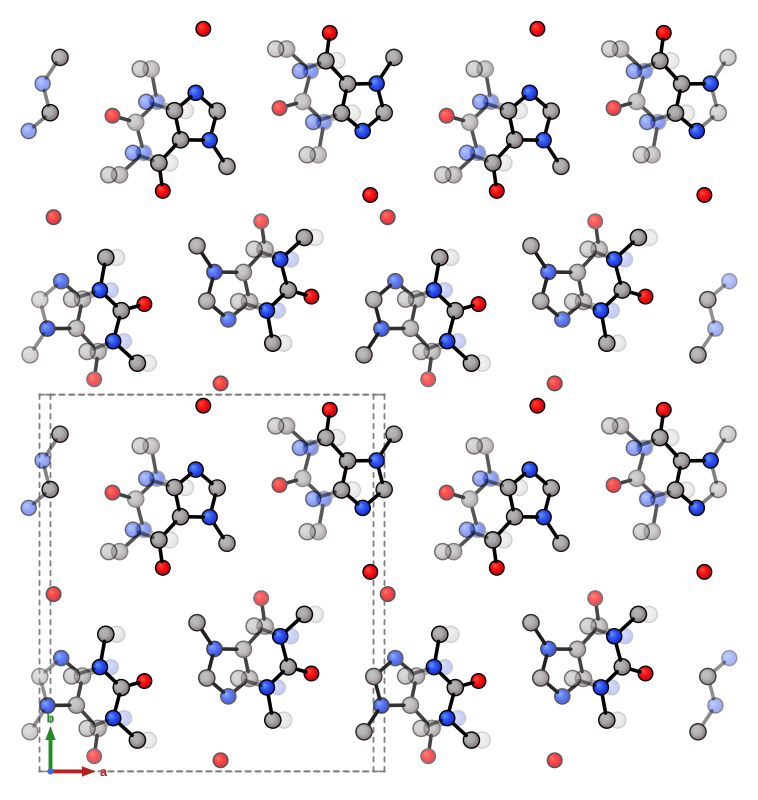
Caffeine 2×2×1 (ghosts) |
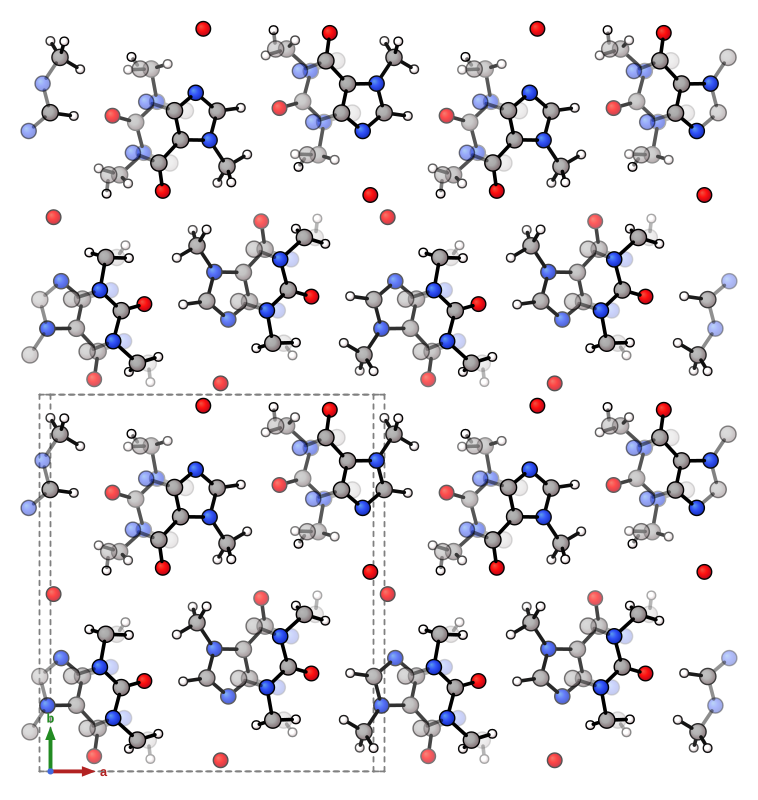
Caffeine 2×2×1 (ghosts + |
NV63 2×2×1 (ghosts) |
|---|---|---|
|
|
|
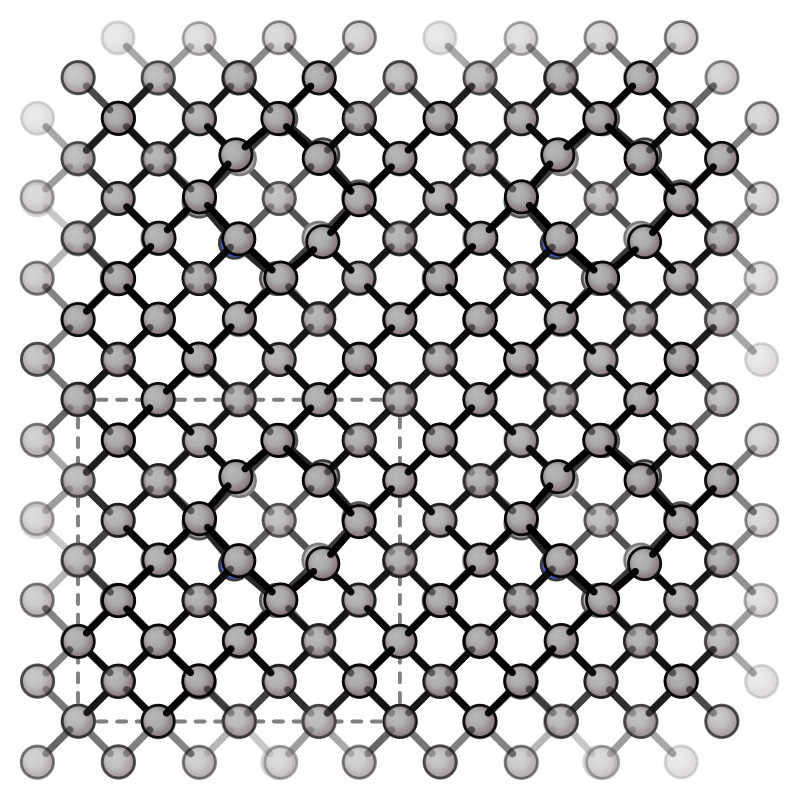
xyzrender caffeine_cell.xyz -o caffeine_cell.svg
xyzrender caffeine_cell.xyz --gif-rot -go caffeine_cell.gif
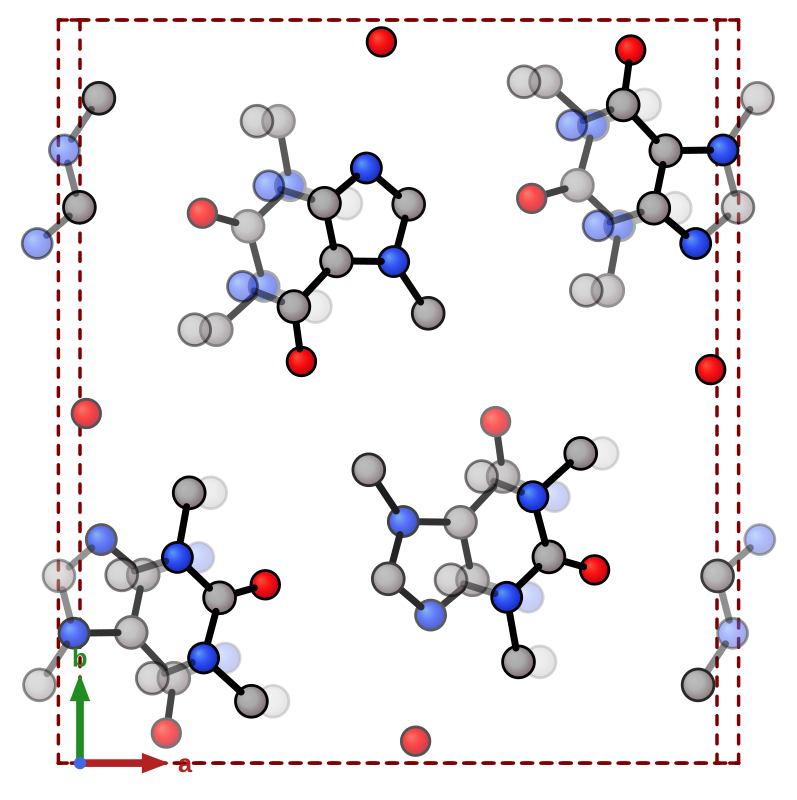
xyzrender caffeine_cell.xyz --cell-color maroon -o caffeine_cell_custom.svg
xyzrender caffeine_cell.xyz --supercell 2 2 1 -o caffeine_cell_supercell_221.svg
xyzrender caffeine_cell.xyz --supercell 2 2 1 --hy -o caffeine_cell_supercell_221_hy.svg
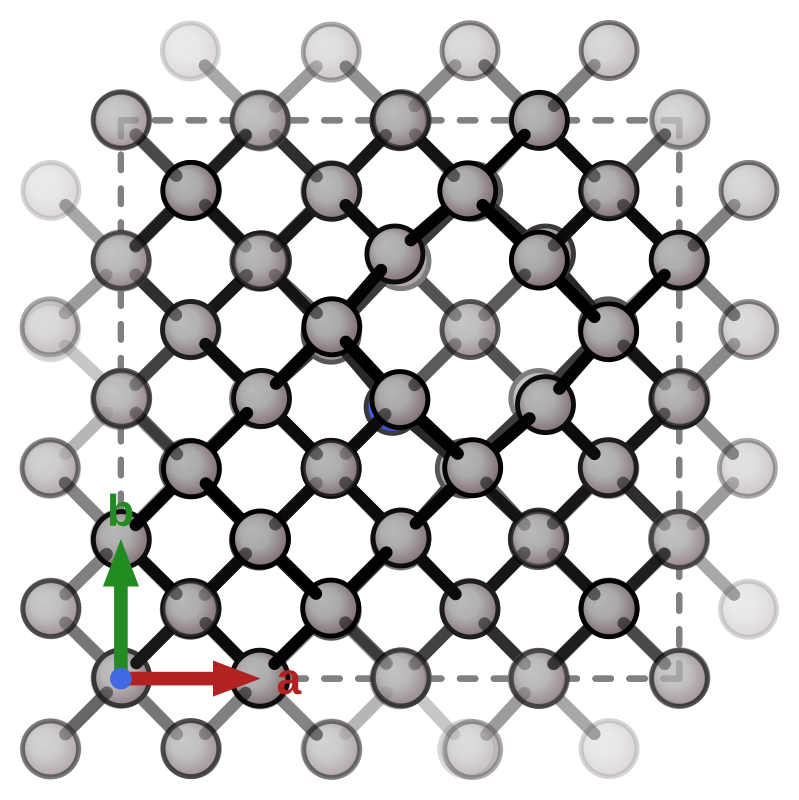
xyzrender NV63_cell.xyz --no-ghosts --no-axes -o NV63_cell_no_ghosts.svg
xyzrender NV63_cell.xyz --no-cell -o NV63_cell_no_cell.svg
xyzrender NV63_cell.xyz --supercell 2 2 1 --no-axes -o NV63_cell_supercell_221.svg
Note
Bond orders are disabled by default for periodic structures — geometry-based perception is not PBC-aware.
The extXYZ comment line must contain a Lattice= key with the 3×3 cell matrix as nine space-separated floats. Tools like ASE can export to extXYZ from CIF or other periodic formats.
Supercell expansion
Expand a periodic structure into a supercell with --supercell M N L, which repeats the unit cell M×N×L times along the lattice vectors (a, b, c). This option is available for any input that includes unit-cell lattice data (e.g. extXYZ Lattice= headers, PDB CRYST1, CIF, VASP, QE, SIESTA, ABINIT, CP2K).
Ghost atoms show the periodic images of the supercell (not the unit cell), while the cell-box overlay always shows the original unit cell. The --hy / --no-hy flags apply to ghost H atoms too.
xyzrender NV63.vasp -o NV63_vasp.svg
xyzrender NV63.vasp --gif-rot -go NV63_vasp.gif
xyzrender NV63.in --no-axes -o NV63_qe.svg
Unwrap molecules across boundaries
Molecular crystals are often stored with molecules wrapped into the unit cell, so a molecule that straddles a face is split across the periodic boundary. --unwrap reassembles each molecule as a single whole fragment by shifting atoms by integer lattice translations, anchoring every molecule at the image where most of its atoms already sat. Ghost atoms are turned off (the molecules are already contiguous), and fully-connected frameworks — ionic or covalent networks with no discrete molecules — are left unchanged.
Wrapped (default) |
Unwrapped ( |
|---|---|
|
|
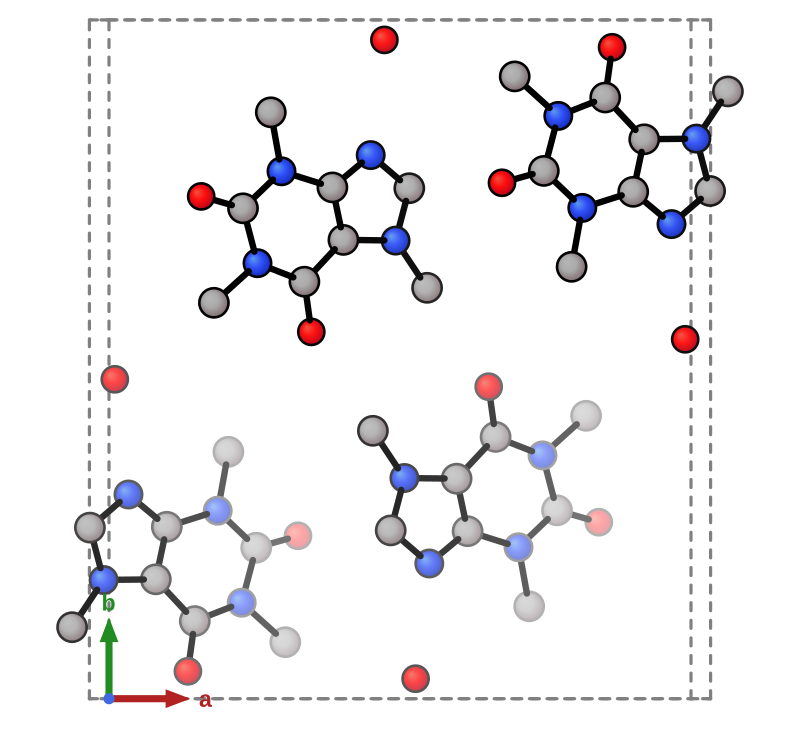
xyzrender caffeine_cell.xyz --unwrap -o caffeine_cell_unwrap.svg
In the Python API this is a render() kwarg, or the standalone unwrap_molecules() transform on a graph:
from xyzrender import load, render
from xyzrender.crystal import unwrap_molecules

mol = load("caffeine_cell.xyz", cell=True)
render(mol, unwrap=True, output="caffeine_cell_unwrap.svg")

unwrap_molecules(mol.graph, mol.cell_data)  # apply the transform directly
Periodic codes
VASP, Quantum ESPRESSO, SIESTA, ABINIT, and CP2K periodic input files are auto-detected from file content. No extra dependencies or flags required.
VASP (NV63) |
VASP rotation |
QE (no axes) |
|---|---|---|
|
|
|
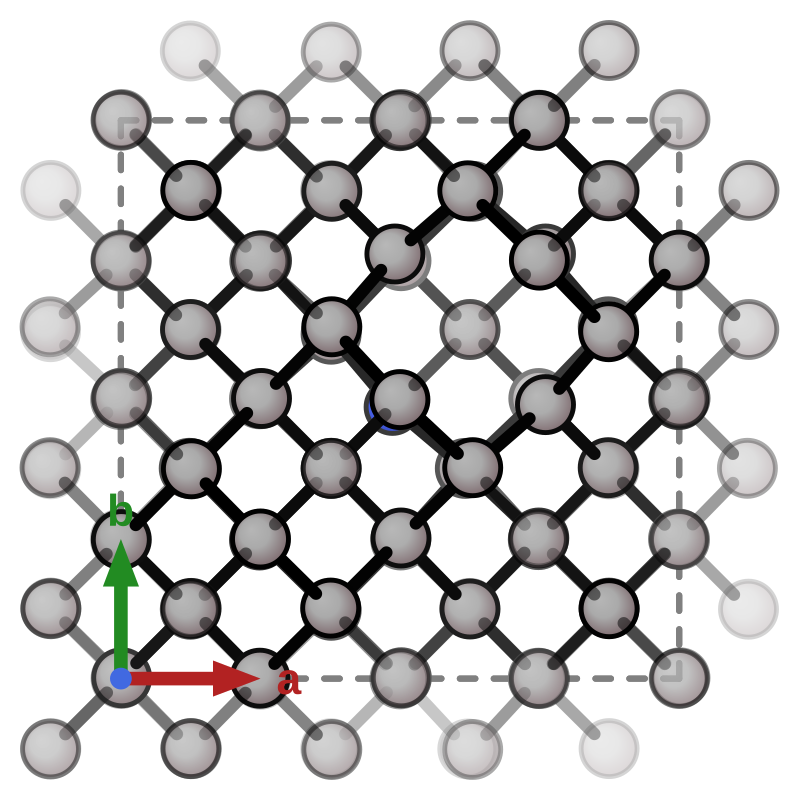
Format is auto-detected from extension (.vasp, POSCAR, CONTCAR → VASP; .in → QE/ABINIT; .fdf → SIESTA; .abi → ABINIT; .inp → CP2K).
Crystallographic viewing direction
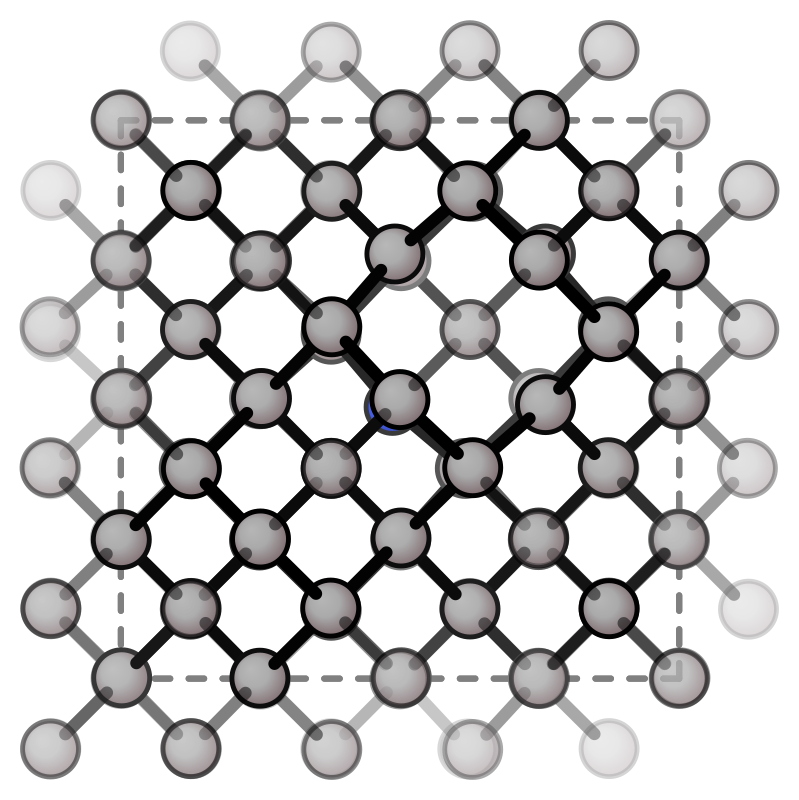
Periodic structures are not PCA auto-oriented; they render in the raw crystallographic frame (a‖x, b‖y, c≈z). If one cell edge is much shorter than the others the default view looks cramped — pick a direction with --axis (3-digit Miller index), often the shortest edge:
xyzrender structure.res --axis 100 --unwrap # look down a short a-axis; reassemble whole molecules
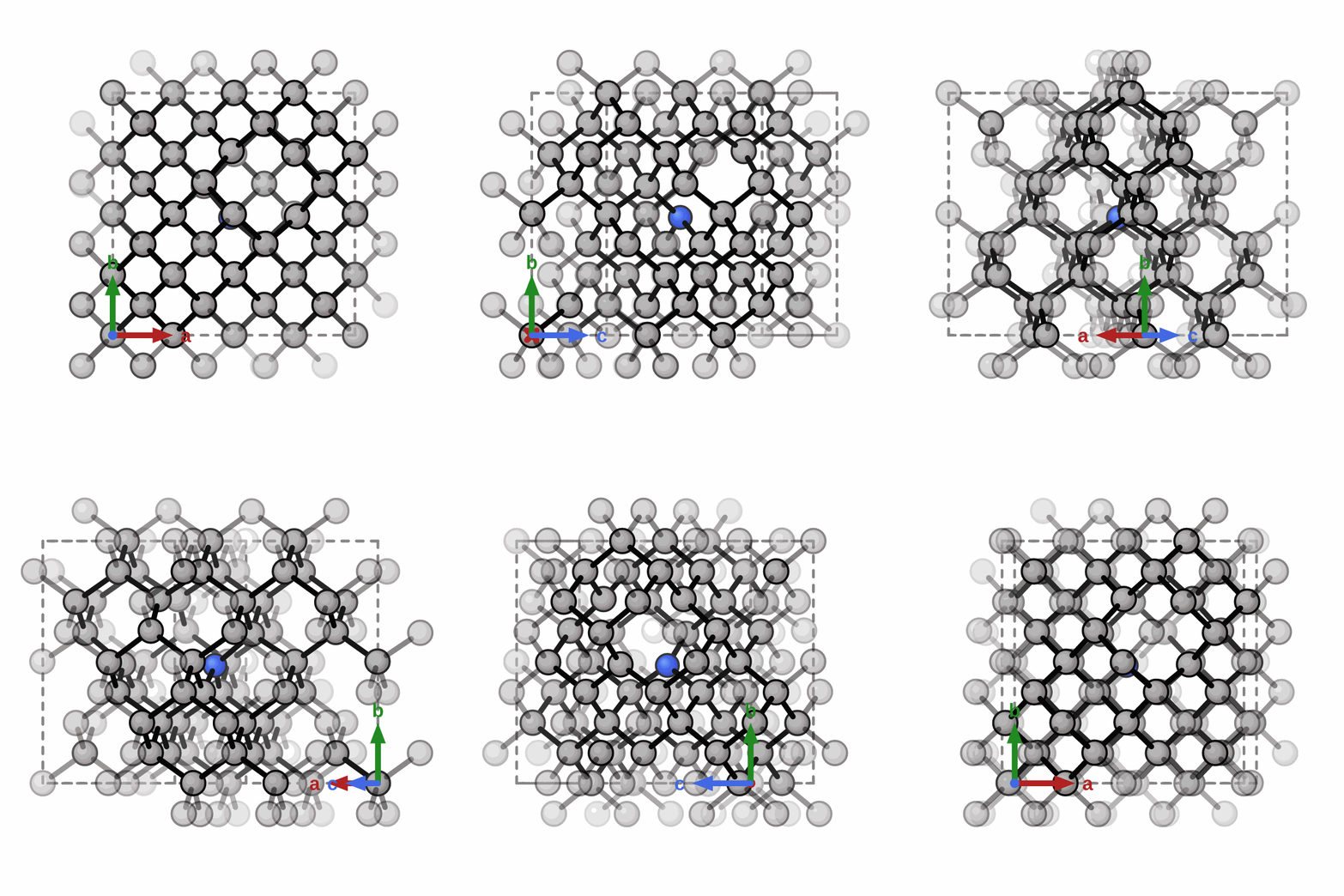
For a periodic material, any Miller index works as a viewing direction:
View along [001] |
View along [111] |
Rotate around [111] |
|---|---|---|
|
|
|
![View along [001]](../_images/NV63_001.svg)
![View along [111]](../_images/NV63_111.svg)
![Rotate around [111]](../_images/NV63_111.gif)
xyzrender NV63_cell.xyz --axis 001 -o NV63_001.svg
xyzrender NV63_cell.xyz --axis 111 -o NV63_111.svg
xyzrender NV63_cell.xyz --axis 111 --gif-rot 111 -o NV63_111.svg -go NV63_111.gif
Crystal flags
Flag |
Description |
|---|---|
|
Force cell rendering for extXYZ (usually not needed) |
|
Hide the unit cell box |
|
Show/hide ghost (periodic image) atoms outside the cell |
|
Opacity of ghost atoms/bonds (default: 0.5) |
|
Show/hide the a/b/c axis arrows |
|
Unit cell box color (hex or named, default: |
|
Unit cell box line width (default: 2.0) |
|
Orient looking down a crystallographic direction (e.g. |
|
Repeat the unit cell |
|
Reassemble molecules split across periodic boundaries so each is drawn whole (disables ghost atoms; frameworks left unchanged) |